Grandma Dai
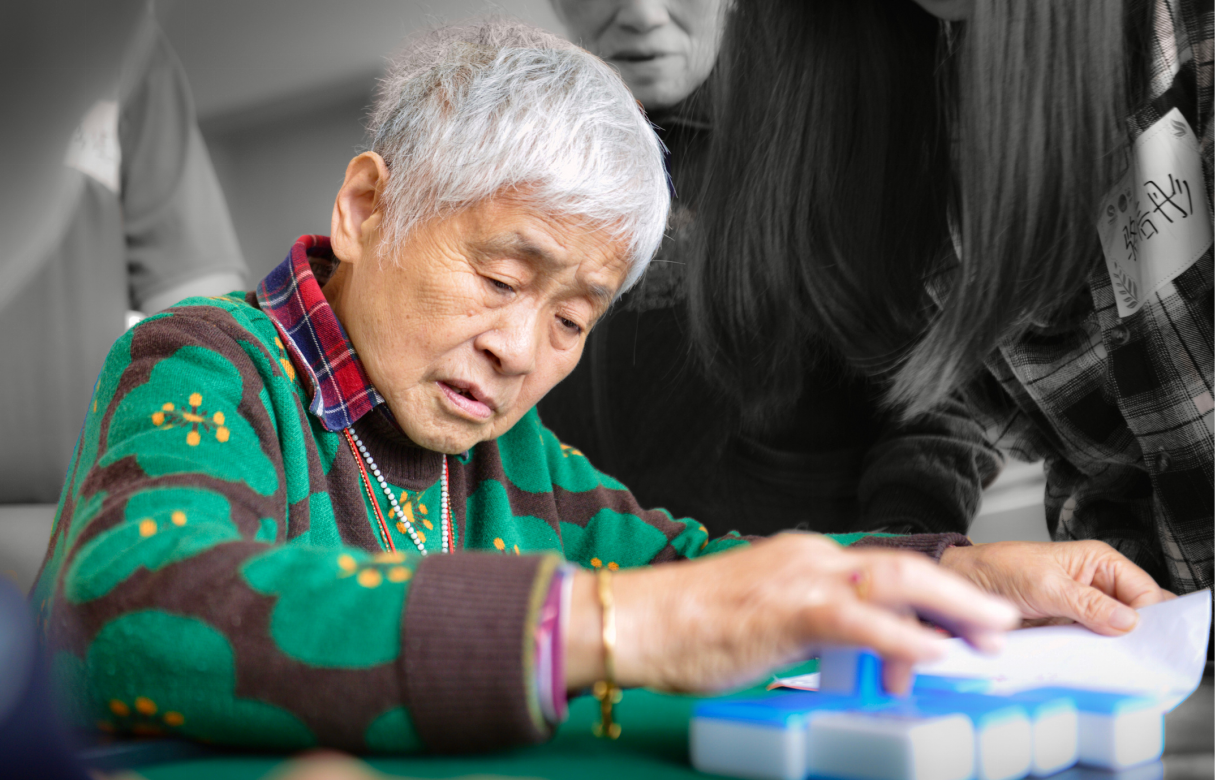
At 84 years old, Grandma Dai has been living with Alzheimer's for many years.
Not long ago, she fell and broke her leg, an unexpected injury that brought her life to an abrupt halt. In the initial days, she appeared confused and despondent. Dementia had blurred her sense of direction—she could barely distinguish left from right. Every attempt to take a step only brought frustration. The light in her eyes gradually dimmed, and her former lively spirit faded away.
But perhaps, her desire to dance with everyone again was stronger than the pain. With firm determination, she embarked on a long and thorny road to recovery. Gripping the walker tightly, sweat continuously trickled down her forehead, soaking her clothes—yet her eyes shone with an unwavering resolve. From barely being able to stand, to now taking trembling steps, each movement was hard-won, paid for with countless tears and silent courage.
"Grandma Dai, you walked a full two steps today!" I couldn't help but cheer for her.
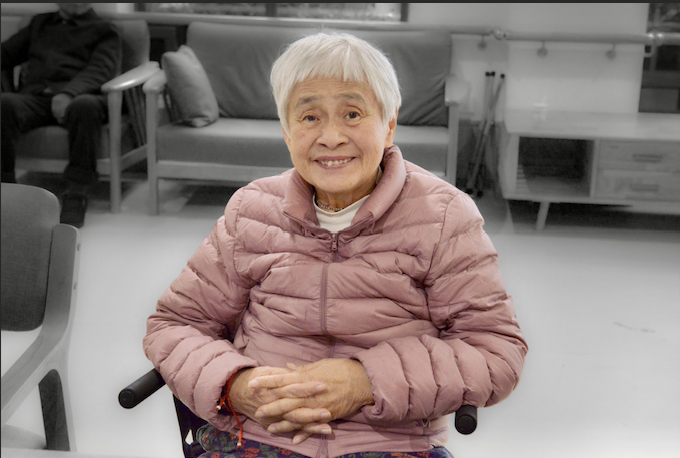
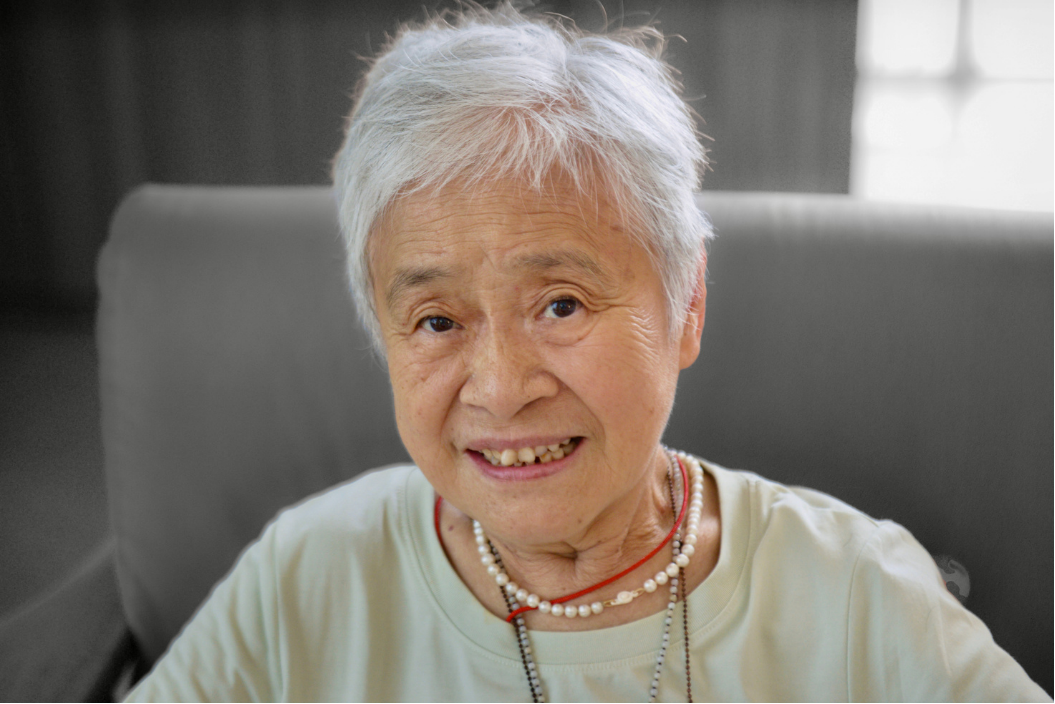
She turned her head, her face blooming into a proud and radiant smile, her eyes sparkling with joy.
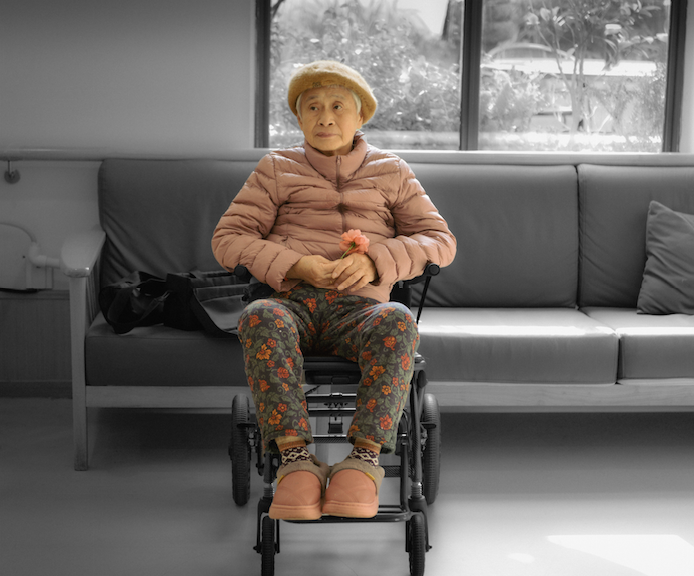
"The Murmur of Memory"
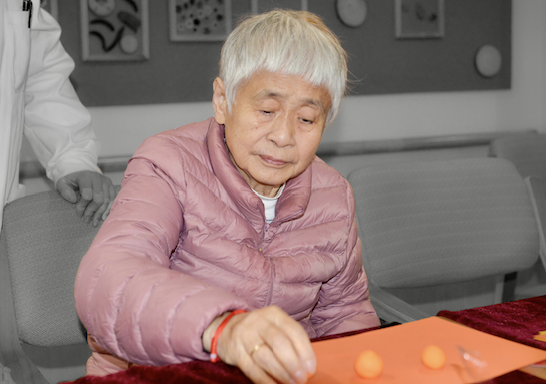
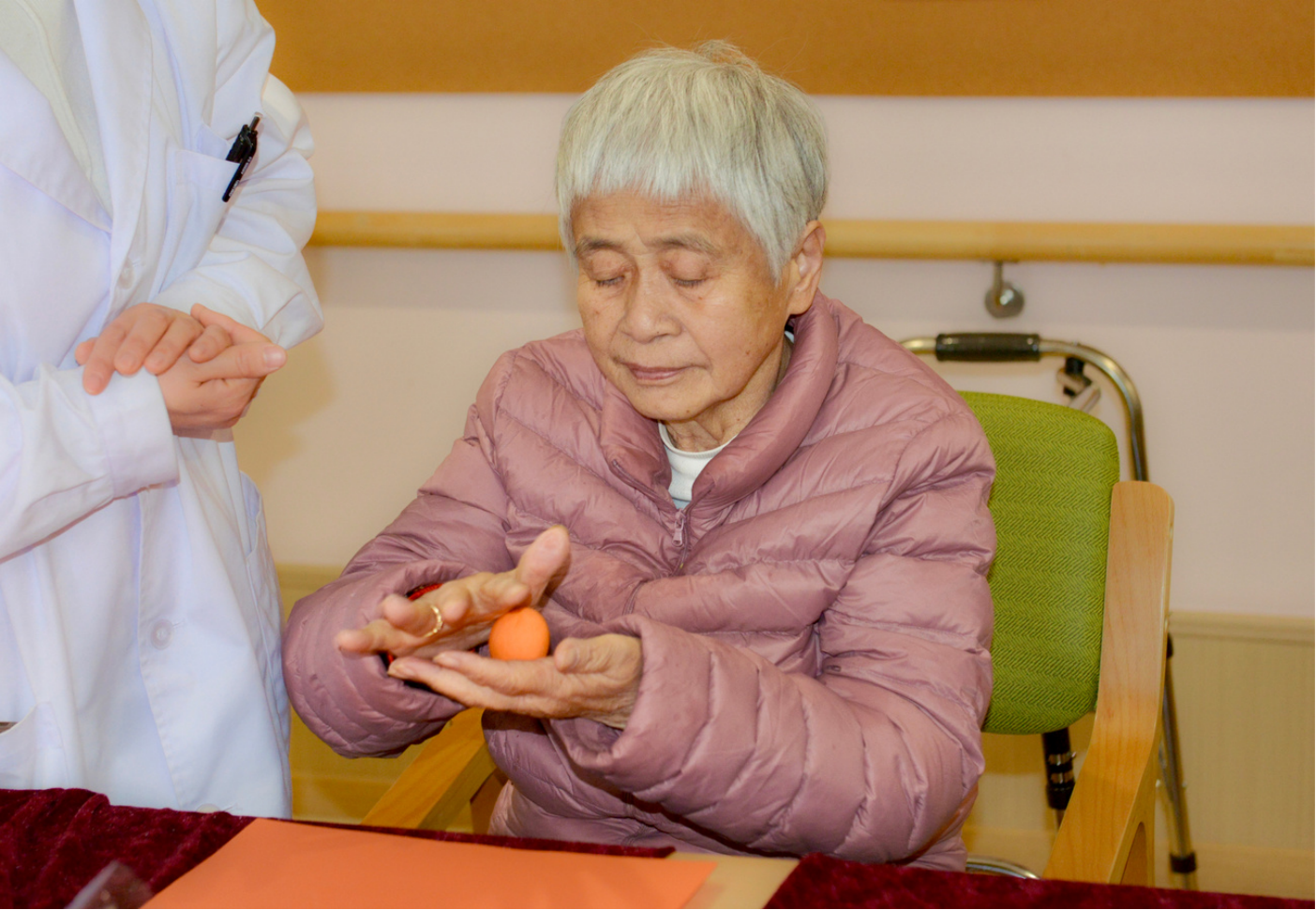
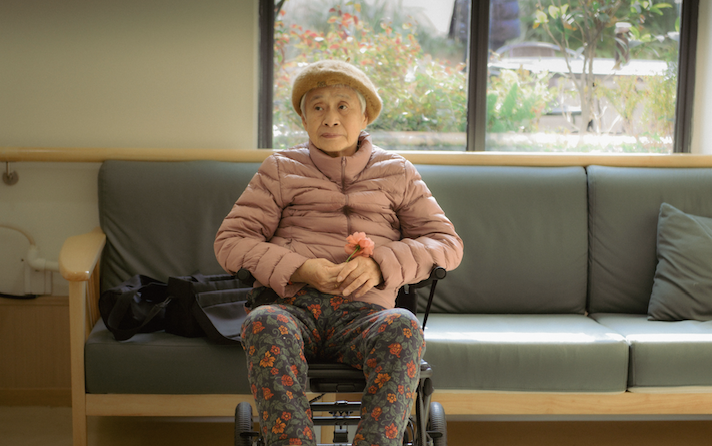
Time has left its mottled marks upon her, yet the small flower in her hand seems to stubbornly whisper of past tenderness and attachment.
She sits there quietly, her gaze holding stories fragmented by time. Every wrinkle hides the minutiae of life, every murmur is a deep, affectionate look back at the past. It is life silently resisting oblivion, carrying a longing and love for the world, and it is also the unique footnote of Grandma Dai's life.
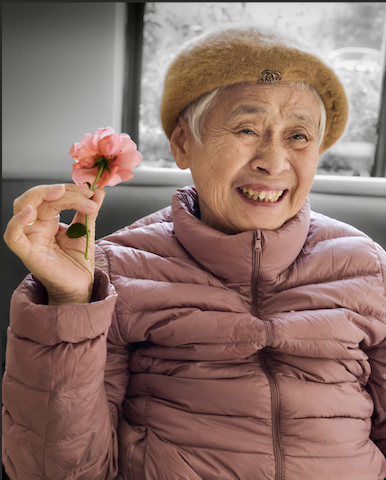
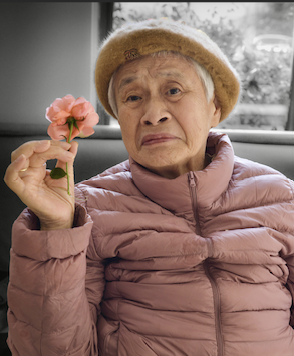
"A Smile as Bright as Flowers"
Pushing open the half-closed door, light streamed in like golden gauze, gently falling across the room, and I saw Grandma Dai at a glance.
She sat quietly by the window, the sunlight outlining her slightly stooped silhouette, like an old painting treasured by time.
The flower in her hand, pink like a maiden's dream, emitted a fresh and bright vitality in this somewhat aged room.
I approached and said softly, "Grandma Dai, the flower in your hand is so beautiful, and it matches the color of your clothes perfectly."
Grandma Dai slowly raised her head, the confusion in her eyes instantly replaced by a flicker of joy. The corners of her mouth turned up into a childlike, proud smile as she said, "Pretty, huh?" That smile, like flowers blooming in spring, was utterly unreserved, every wrinkle filled with pure happiness.
Time has left its mottled marks upon her, yet the small flower in her hand seems to stubbornly whisper of past tenderness and attachment.
She sits there quietly, her gaze holding stories fragmented by time. Every wrinkle hides the minutiae of life, every murmur is a deep, affectionate look back at the past. It is life silently resisting oblivion, carrying a longing and love for the world, and it is also the unique footnote of Grandma Dai's life.
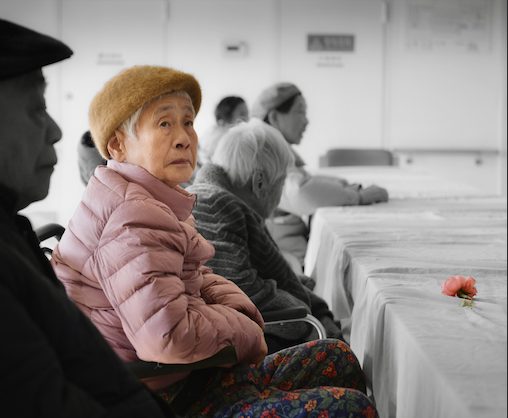
"Oblivion"
I sat down beside her, quietly keeping her company.
She occasionally gently stroked the petals, occasionally murmuring to herself, her words interspersed with vague vocabulary and broken sentences.
The flower in her hand, pink like a maiden's dream, emitted a fresh and bright vitality in this somewhat aged room.
I knew that in her world, the puzzle pieces of memory had already begun to fragment; those once clear people and events were now shrouded in mist.
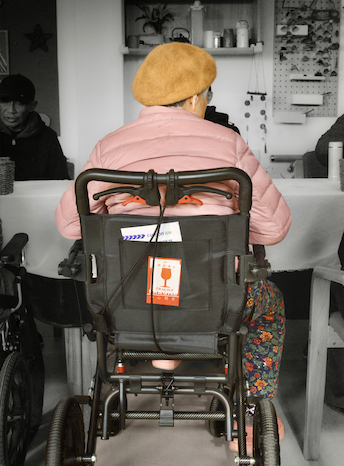
Grandma Dai sat quietly in her wheelchair, outlined by a soft halo of sunlight, like a silhouette cherished by time.
Some time ago, Grandma Dai accidentally broke her leg in a fall. This sudden accident plunged her life into difficulty, forcing her onto the wheelchair.
In the early stages of her injury, she was listless, her eyes full of loss and helplessness. The progression of her dementia even made it difficult for her to distinguish left from right. Every attempt to move her body resulted in deep frustration.
In those days, she seemed shrouded in a haze, her former vitality gone.
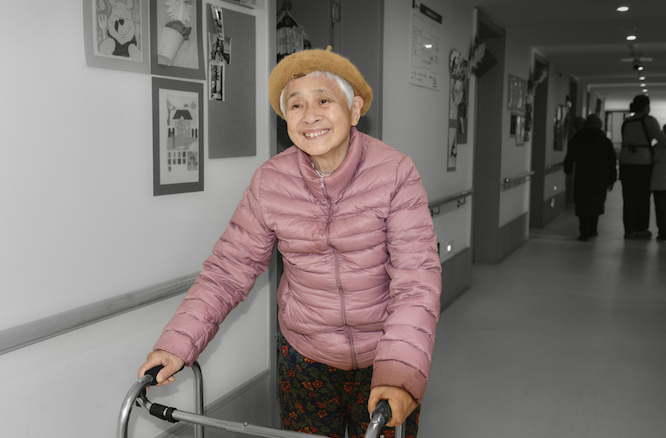
But perhaps her wish to dance with everyone again was too strong. Grandma Dai slowly began to adjust herself, embarking on this thorny road to recovery with the courage of burning her boats.
She gripped the handles of the walker tightly, beads of sweat rolling down her forehead, soaking her clothes.
But in her eyes, there always shone a determined light, supporting her as she inched forward.
From initially being able to barely stand, to now being able to take a few trembling steps—behind each step, I believe, is condensed countless drops of her sweat and tears.
"Grandma Dai, you can even walk two steps with the walker, you are amazing!"
Grandma Dai turned her head, looked at me with a beaming smile, her face full of pride and delight.